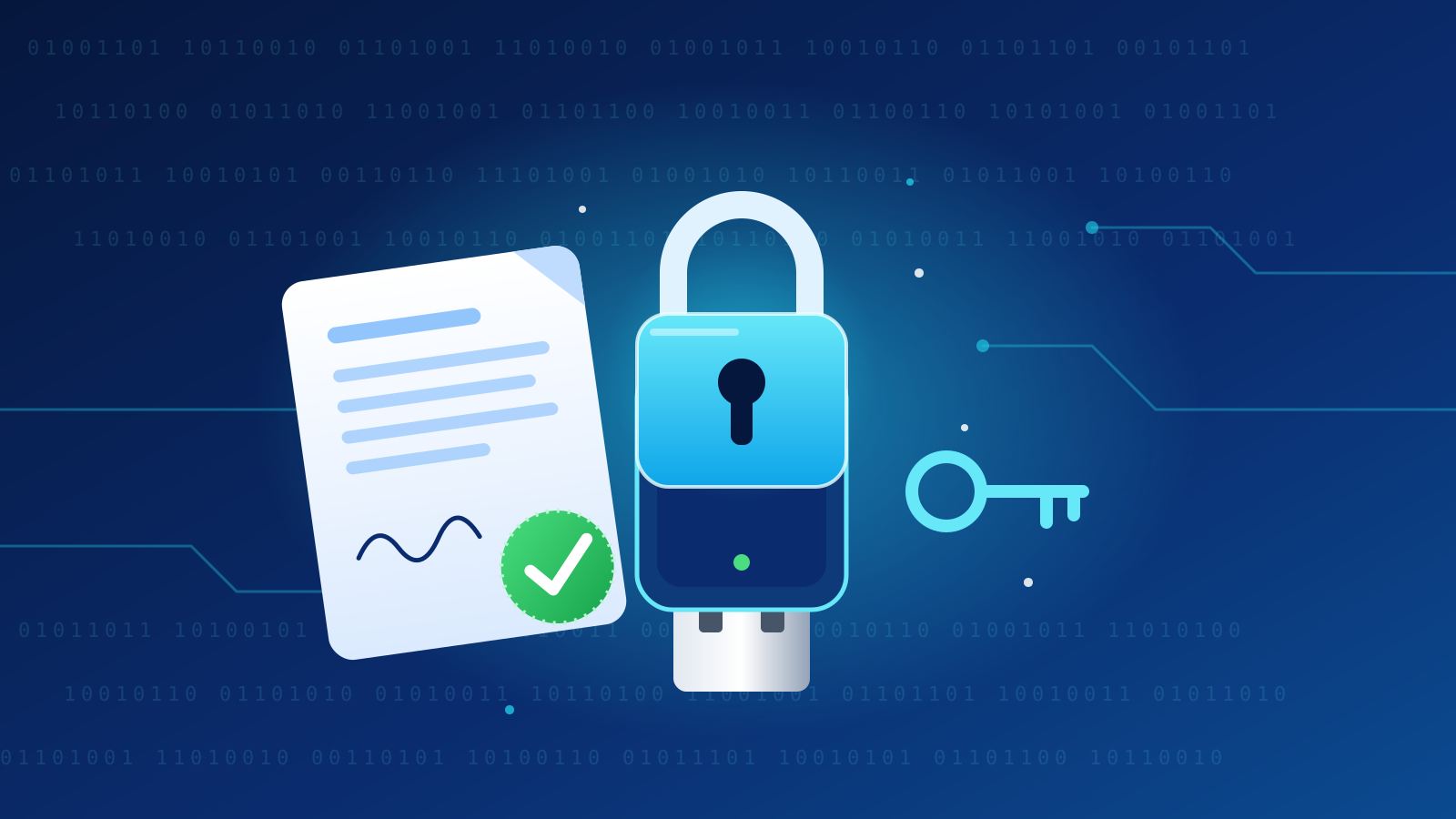
What Is a Digital Signature Certificate (DSC)?
A Digital Signature Certificate (DSC) is a secure electronic credential issued by a licensed Certifying Authority that confirms your identity online. It links you to a pair of cryptographic keys, letting you sign documents and file forms digitally. Under Indian law, a valid DSC makes your signature legally recognised and your document tamper-evident.
India's Information Technology Act, 2000 defines digital signatures, sets out how electronic records are authenticated (Section 3) and gives electronic signatures legal recognition (Section 5). The Controller of Certifying Authorities (CCA), under the Ministry of Electronics and Information Technology, licenses the Certifying Authorities that issue DSCs.
At Get Digital Sign, we help individuals and businesses get a DSC without the paperwork delays
.
How Does a DSC Work?
A DSC runs on Public Key Infrastructure (PKI). You receive two linked keys: a private key, which stays secret on your cryptographic USB token, and a public key, which is shared inside your certificate. Whatever the private key signs, only the matching public key can verify.
When you sign, software creates a short fingerprint (a hash) of the document and locks it with your private key. The receiver unlocks it with your public key and compares it against a fresh hash of the document. If they match, the file is genuine and unchanged. Even one altered comma breaks the match.
DSC vs. eSign: What's the Difference?
Both a DSC and an eSign are recognised in India, but they suit different jobs. A DSC is a certificate you hold, usually on a hardware token, so you can sign again and again until it expires. It is the standard choice for regulatory filings and e-tenders.
eSign is an online service that verifies you through Aadhaar e-KYC and signs on a provider's server, so no hardware token is needed. The certificate it creates has a limited validity and is meant for one-time signing, according to the CCA. In short, pick a DSC for frequent or mandatory portal use, and eSign for a quick one-off signature where the receiving party accepts it.
Who Needs a DSC?
- Income tax filing: companies and professionals use a DSC on the Income Tax e-filing portal to sign and verify returns.
- MCA / ROC filings: directors and professionals sign e-forms on the MCA portal with a registered Class 3 DSC.
- e-Tendering: government bidding portals use a DSC to log in, sign and encrypt bids.
- GST and Import-Export Code (IEC): a DSC is used to sign registrations and returns on the GST and DGFT portals.
How to Apply for a DSC Online
- Choose your certificate. Since 1 January 2021, only Class 3 certificates are issued in India. Pick signing or signing plus encryption (common for tenders), and a validity of 1, 2 or 3 years.
- Complete e-KYC. Verify your identity with Aadhaar or PAN details.
- Finish video verification. A short video check confirms you are the real applicant.
- Receive your DSC on a secure USB token. Your private key stays on the token. Install the driver and start signing.
Ready to begin? Apply for your DSC at Get Digital Sign.
Frequently Asked Questions
What is the validity of a DSC? Certifying Authorities typically offer 1, 2 or 3 years. The expiry date appears in your certificate details.
Can I use a DSC without a USB token? For most government filings, a token is the standard way to store the private key safely. For a one-time signature, eSign can work where the receiving portal accepts it
.
What happens if my DSC expires? You can no longer sign or log in with it. Signatures made earlier stay valid, but you need to renew the certificate, which involves fresh identity verification. Renew a few days early to protect filing deadlines.
Is a DSC the same as a digital signature? No. The digital signature is the mark on the document. The DSC is the certificate that proves the key behind it belongs to you.
Sources and credits (official information adapted in our own words):
- Controller of Certifying Authorities, Government of India: DSC FAQs and eSign Online Electronic Signature Service brochure
- Information Technology Act, 2000, Government of India (Gazette text): WIPO Lex copy
- Ministry of Corporate Affairs: mca.gov.in | Income Tax Department: incometax.gov.in
- Class 3 only from 1 January 2021 and 1/2/3-year validity as reported by licensed Certifying Authority eMudhra: emudhradigital.com